

In precision industrial manufacturing and dissimilar material assembly, achieving an optimal balance between bonding strength, curing speed, thermal resistance, and product appearance is a critical challenge for process engineers and product development professionals. In particular, the assembly of precision components made of stainless steel, nickel-plated metals, and plastics places increasingly stringent demands on adhesive penetration, curing kinetics, and environmental resistance.
Cartell Chemical introduces MXBON® 21520 High-Speed Wicking Cyanoacrylate Adhesive, combining excellent penetration, rapid curing, low blooming, and temperature resistance up to 120°C.
Specifically developed for precision metal bonding, dissimilar material assembly, post-assembly joint reinforcement, and localized protective coating, MXBON® 21520 provides an advanced industrial bonding solution that enhances both manufacturing efficiency and bonding quality.
What Is a Wicking Cyanoacrylate Adhesive, and Why Is It Suitable for Precision Component Assembly?
A wicking cyanoacrylate adhesive is a highly flowable instant adhesive designed to penetrate microscopic gaps between closely fitted components through capillary action. This characteristic enables localized bonding and structural reinforcement even after assembly.
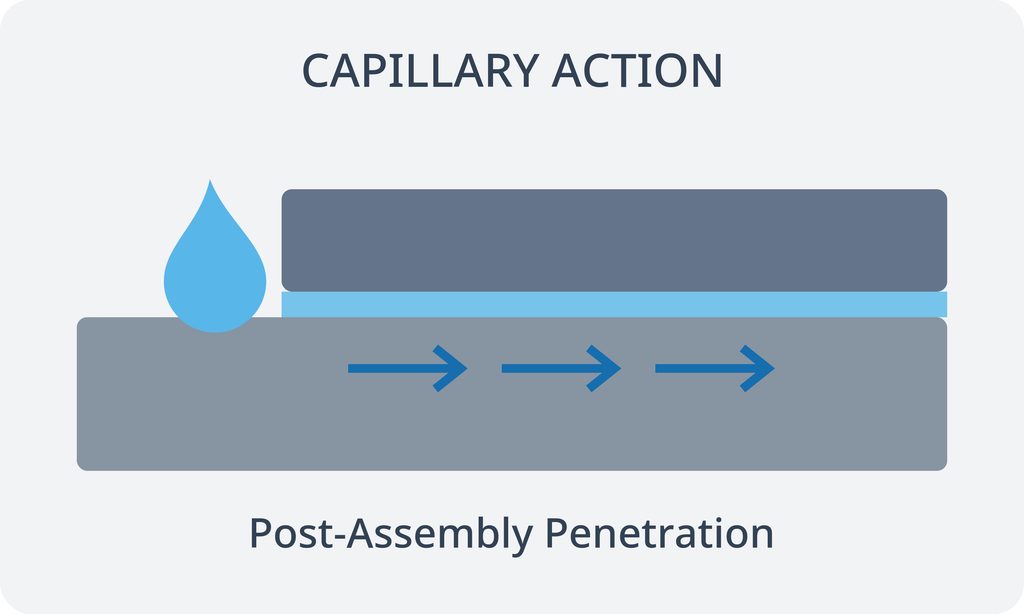
Compared with conventional adhesive application methods that require dispensing before assembly, wicking cyanoacrylate adhesives are particularly suitable for:
- Post-assembly joint penetration and reinforcement.
- Bonding and securing components with minimal joint clearances.
- Bonding dissimilar materials, such as metals, plastics, and rubber.
- Adhesive application in narrow or difficult-to-access bonding areas.
- Localized protective coating, gap filling, and water-resistance enhancement.
However, conventional wicking cyanoacrylate adhesives may present challenges such as adhesive overflow, excessive penetration, and blooming due to their high fluidity and insufficient surface curing speed.
Achieving an optimal balance between high fluidity and rapid curing is therefore a key technical objective in the development of advanced wicking cyanoacrylate adhesives.
Why Was MXBON® 21520 Developed? Addressing Three Major Challenges in Precision Metal Bonding
1. Slow Surface Curing on Metal Substrates
The curing mechanism of cyanoacrylate adhesives is initiated by trace amounts of moisture present on substrate surfaces. Metal substrates such as stainless steel, nickel-plated metals, and chrome-plated metals may have relatively low levels of available surface moisture under certain processing conditions. This can result in slower surface curing of exposed adhesive, extending manufacturing cycle times and creating challenges for subsequent processing operations.
2. Adhesive Blooming Compromises Product Appearance
During the curing process, cyanoacrylate adhesives may generate a phenomenon known as blooming, also referred to as whitening or frosting. This phenomenon can leave white residues around the bonded area, compromising the appearance of metal components, precision housings, and other products with stringent aesthetic requirements. For high-precision and high-value industrial products, adhesive blooming may also increase the need for additional cleaning and visual quality inspection.
3. Bond Strength Degradation at Elevated Temperatures
When bonded assemblies are exposed to elevated temperatures for extended periods, adhesive softening, thermal expansion, and differences in the coefficients of thermal expansion between dissimilar substrates may introduce additional stress at the bonding interface. These factors can potentially compromise bonding strength and long-term joint reliability.
Through its advanced cyanoacrylate formulation technology, Cartell Chemical developed MXBON® 21520 to combine rapid curing, low blooming, and enhanced thermal resistance while maintaining excellent penetration capabilities, addressing the processing limitations associated with conventional wicking cyanoacrylate adhesives.
What Are the Four Key Advantages of MXBON® 21520?
Excellent Penetration | High Penetration
MXBON® 21520 features excellent fluidity, allowing the adhesive to penetrate microscopic gaps between precision components through capillary action. Its superior wicking capability makes it particularly suitable for post-assembly bonding and joint reinforcement, facilitating adhesive application in narrow and difficult-to-access areas.
Ultra-Fast Curing | Rapid Fixture and Surface Cure
MXBON® 21520 delivers rapid initial fixture and improved surface curing of exposed adhesive on metal substrates. These characteristics help reduce manufacturing cycle times while minimizing the risk of excessive adhesive penetration into internal component structures.
Low Blooming | Enhanced Surface Appearance
Through its rapid curing mechanism and low-blooming formulation, MXBON® 21520 helps minimize white residue formation on surrounding substrate surfaces during the curing process. This contributes to maintaining the appearance of precision components while reducing the need for subsequent cleaning operations.
High Temperature Resistance | Up to 120°C
MXBON® 21520 is formulated to enhance bonding performance and thermal resistance on stainless steel substrates. It demonstrates good bonding strength retention following thermal aging, making it suitable for industrial component assembly and joint reinforcement applications with elevated-temperature resistance requirements.
What Industrial Bonding Applications Is MXBON® 21520 Suitable For?
Precision Component Assembly and Post-Assembly Joint Reinforcement
MXBON® 21520 is particularly suitable for stainless steel and other metal substrates with limited available surface moisture. It can also be used for bonding dissimilar materials, including metals, plastics, and rubber. Its excellent penetration capability makes it suitable for post-assembly bonding of precision mechanical components, metal housings, and plastic assemblies, providing localized fixation and joint reinforcement through capillary action.
Precision Medical Device Component Assembly
MXBON® 21520 may be evaluated as an industrial-grade adhesive solution for bonding precision metal and plastic components in medical device manufacturing, particularly in assembly processes requiring thermal resistance and water resistance. For specific medical device applications, suitability must be individually validated according to device classification, intended operating conditions, biocompatibility requirements, and sterilization protocols.
Magnet Bonding and Rapid Positioning
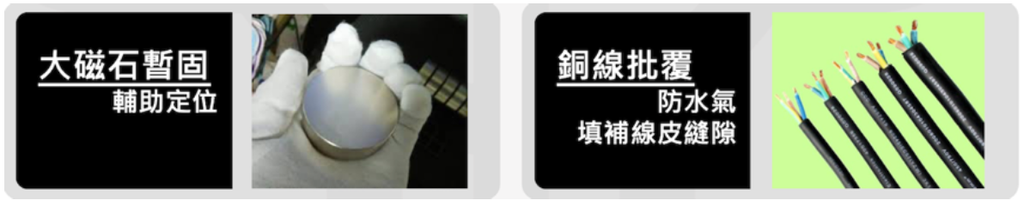
With its rapid initial fixture capability, MXBON® 21520 facilitates the precise positioning and temporary fixation of magnets and associated components. This characteristic helps improve assembly efficiency and facilitates subsequent manufacturing operations.
Localized Wire and Cable Sealing and Water-Resistance Enhancement
The highly flowable formulation of MXBON® 21520 enables penetration into small gaps in wire insulation and localized protective coating of exposed copper wires. It may be evaluated as an adhesive solution for localized sealing and water-resistance enhancement in wire and cable manufacturing processes.
Precision Housing Seam Bonding and Rubber Component Repair
MXBON® 21520 is suitable for bonding microscopic seams in precision housings, as well as localized gap filling and repair of minor defects in rubber components. Its versatile application capabilities support a wide range of industrial assembly, maintenance, and repair requirements.
MXBON® 21520 Product Specifications and Technical Characteristics
| Product Parameter | Product Information |
|---|---|
| Brand | MXBON® |
| Product Model | 21520 |
| Product Type | Wicking Cyanoacrylate Adhesive |
| Product Name | High-Speed Wicking Cyanoacrylate Adhesive |
| Appearance | Clear and Colorless |
| Flow Characteristics | High Fluidity and Excellent Penetration |
| Curing Characteristics | Ultra-Fast Initial Fixture |
| Blooming Characteristics | Low Blooming |
| Temperature Resistance | Up to 120°C |
| Compatible Substrates | Stainless Steel, Metals, Plastics, and Rubber |
| Primary Applications | Precision Bonding, Rapid Positioning, Wicking Reinforcement, and Localized Protective Coating |
| Packaging Sizes | 20 g, 500 g |
*For detailed technical specifications, including viscosity, fixture time, full cure time, and bond strength, please contact Cartell Chemical’s sales and technical support team.
Frequently Asked Questions (FAQ)
Q1: What Is the Difference Between a Wicking Cyanoacrylate Adhesive and a Conventional Cyanoacrylate Adhesive?
Wicking cyanoacrylate adhesives feature high fluidity, allowing them to penetrate microscopic gaps between closely fitted components through capillary action. They are particularly suitable for post-assembly joint reinforcement and difficult-to-access bonding areas. MXBON® 21520 further combines ultra-fast curing and low-blooming characteristics to overcome the processing limitations associated with conventional wicking cyanoacrylate adhesives.
Q2: Can MXBON® 21520 Bond Stainless Steel?
Yes. MXBON® 21520 is specifically developed for bonding stainless steel and other metal substrates with relatively low levels of available surface moisture. Its bonding performance has been validated through stainless steel lap shear strength testing and thermal aging tests.
Q3: Is MXBON® 21520 Resistant to High Temperatures?
MXBON® 21520 offers temperature resistance up to 120°C. Cartell Chemical conducted thermal aging tests at 120°C for 24 hours to evaluate bond strength retention after the bonded specimens returned to room temperature. Actual application suitability should be evaluated based on operating temperature, thermal exposure duration, and mechanical loading conditions.
Q4: Can MXBON® 21520 Completely Eliminate Adhesive Blooming?
MXBON® 21520 features a low-blooming and rapid-curing formulation that effectively reduces the spread of white residues onto surrounding substrate surfaces. However, it is not completely bloom-free. The actual degree of blooming may vary depending on the amount of adhesive applied, environmental conditions, and substrate characteristics.
Q5: How Long Does MXBON® 21520 Take to Cure?
MXBON® 21520 provides exceptionally rapid initial fixture capabilities. Under test conditions involving the application of 0.5 mL of adhesive onto a nickel-plated steel specimen, the surface-dry time is approximately 5–15 minutes. Initial fixture time, surface-dry time, and full cure time are distinct performance indicators. Actual manufacturing processes should be evaluated based on technical product data and application-specific testing.
Q6: Is MXBON® 21520 Suitable for Medical Device Applications?
MXBON® 21520 was developed with the assembly requirements of precision metal and plastic components in medical device manufacturing in mind. It may be evaluated as an industrial-grade adhesive for relevant assembly processes. For applications involving human contact, biocompatibility requirements, or specific sterilization procedures, product suitability and applicable regulatory requirements must be individually verified based on the intended use.
Q7: What Packaging Sizes Are Available for MXBON® 21520?
MXBON® 21520 is currently available in 20 g and 500 g packaging sizes, allowing manufacturers to select the most suitable packaging according to their production processes, adhesive dispensing equipment, and consumption requirements.
Cartell Chemical | Professional Adhesive Solutions for Precision Industrial Manufacturing
Cartell Chemical has extensive expertise in cyanoacrylate adhesive technology and industrial bonding applications. Through advanced formulation development, product validation, and professional technical support, we are committed to helping manufacturers worldwide optimize their bonding processes, improve production efficiency, and enhance product quality.
Whether you are seeking specialized stainless steel bonding solutions, low-blooming cyanoacrylate adhesives, heat-resistant adhesives, or opportunities to optimize existing precision component assembly processes, Cartell Chemical welcomes the opportunity to discuss your specific application requirements.
📩 Contact Cartell Chemical today to request MXBON® 21520 technical documentation, product samples, and professional adhesive application consultation.
Further Reading
- MXBON Medical Device Adhesive: Solving Medical TPE Soft Material Bonding Issues
- How to Choose Adhesives for CNC Machine Tools? MXBON Anaerobic Adhesives Empower High-Precision Manufacturing
- How Do MXBON Adhesives Improve Cooling Fan Assembly Efficiency and Reliability?
- How Do MXBON® Adhesives Provide Comprehensive Bonding Solutions for Robotic Vacuum Cleaner Production Lines?